

Decision Making
And why you need to do more of it.

The Real Advantage
I know a guy who is highly sought after in his career. He’s great at his job, and the main reason is because his superpower is being decisive. It makes life for him and everyone around him more effective at making progress.
His reputation for progress and his timing on creating impact is the reason people want to hire him, but the real advantage is that he can make decisions. He’s navigated his industry for long enough that he can sniff things out pretty quick and take action.
Decisiveness is Not Always Certainty
The skill of being decisive isn’t always a feeling of being grounded in every decision you make. In fact, nearly half of the time it may feels like a shot in the dark. The real barrier isn’t lack of information, it’s discomfort with risk.
Sometimes you choose wrong. That’s fine. Actually, that’s useful. The faster you learn what doesn’t work, the faster you can adjust, course correct, and keep moving forward. The faster real and substantial progress comes.
Small but Mighty
A few months ago, I interviewed a candidate who said something that stuck with me. He told me he strictly only considers working at companies with small teams. Places where everyone is aligned around getting things moving and seeing what works.
He chooses this because he wants to be on teams where there is a path to impact, where experimenting is celebrated. To him, this results in skipping the line of brands aiming for perfection, and avoids the frustration of never really going anywhere due to having too many opinions of what “perfect” looks like.
In this kind of company, there are less “stop signs”, and more “continue at your own risk” signs. It’s is a mindset of immediate impact where companies can continue to make things better as they grow and are not afraid to do this publicly.
Actually this resonates with the hyper polished world we live in now, where we’re are all a little numbed by the over curated content we consume. To him, this feels more real. To him, that’s what real progress looks like. After my own years of corporate hoop jumping I’d have to agree.
The 70% Rule
Small teams can operate in this world, but of course it’s a spectrum, and not reserved for only small agile teams.
Big thought leaders are also doing this. Jeff Bezos talks about the 70% rule. If you have about 70% of the information you want, that’s enough to make a decision.
Waiting for 90% usually means you waited too long.
The remaining 30%? You’ll deal with it later, through a pivot, a correction, or a lesson. This is where growth comes from.
Waiting Too Long
Waiting for perfect information usually means you move too late.
The results of this can show up anywhere.
You lose a great candidate because you’re waiting to compare them to someone similar.
You miss a cultural moment because by the time the post goes live, it’s no longer timely…it’s just another version of what everyone else is doing.
You stall a brand launch because brand deck feedback loops turn into endless refinement.
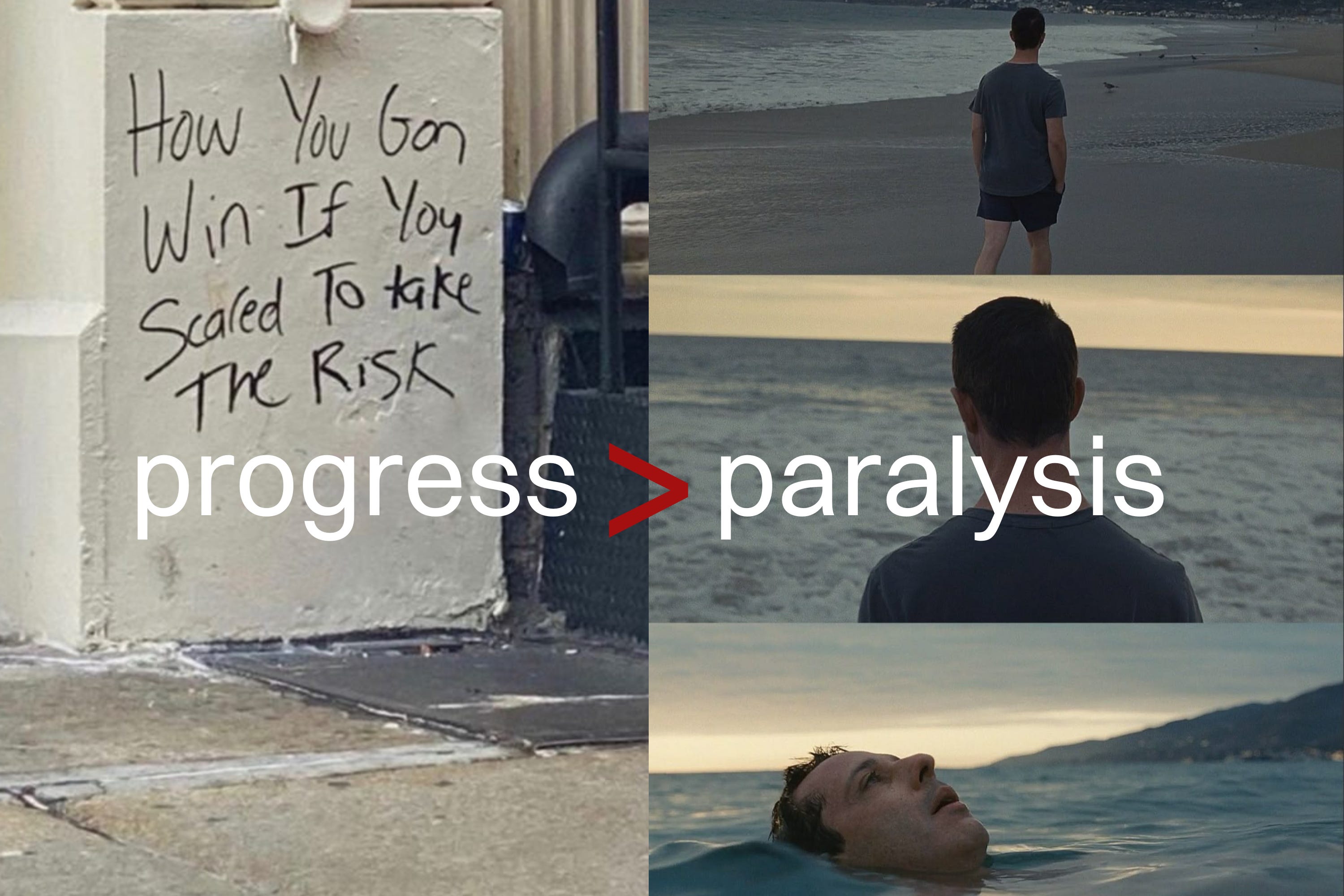
Choosing Progress Over Paralysis
Making decisions quicker actually does mean success can come sooner. It’s an uneven road that teaches lessons faster, provides opportunities to make changes sooner, and helps get your footing in the right direction.
Most things that resonate or stand out anyway tend to be imperfect, human, and refinement comes later. Decisiveness isn’t about being right all the time. It’s about choosing progress over paralysis.
In Summary
Let go of having all of the answers.
Be willing to move with the information you do have.
Trust yourself enough to learn along the way.